Buzz Cut for Thinning Hair: Which Guard to Ask For
A buzz cut for thinning hair, pattern by pattern: the guard for a receding hairline, a thin crown or diffuse thinning, plus fades, beards and when to shave.



Thinning hair pushes a lot of people toward the clippers, and for good reason: done right, a buzz cut is one of the most flattering things you can do with less hair. Done wrong — the wrong guard, a sharp line-up, sides left bushy — it puts a spotlight on exactly what you wanted to play down. This guide goes pattern by pattern: which guard to ask for, when a fade helps, when to shave it all off instead, and how to look after the scalp you're about to show. If you're still deciding whether to buzz at all, start with should I get a buzz cut.
Why a buzz haircut for thinning hair works
Thinning shows through contrast: thick hair next to thin hair, and dark hair against a lighter scalp. Length makes both worse. On a thinning area, longer strands clump together and fall apart along the gaps, so the scalp shows in lines and patches — when your hair is wet, in the wind, under a bathroom light. Meanwhile the full sides and back look even thicker by comparison.
A buzz cut takes away the length that makes those gaps. Clipped short, each hair stands up on its own instead of lying flat and parting, and the whole head reads as one even texture. At a #1 or #2 a little scalp shows through everywhere — on everyone, even people with a full head of hair — so the thin areas stop standing out. You also stop fighting it: no comb-over to rebuild, nothing that falls apart in the rain.

Receding hairline
Deep temples, a patch left in the middle

Thinning on top
Scalp shows through the top
Widening part
Common in women; the front stays put

Horseshoe
Bare on top, full at the sides
What a buzz can't do is change the shape of your hairline or the amount of hair you have. It changes how noticeable the thinning is, not the thinning itself. Cutting also doesn't affect how hair grows: it won't come back thicker, and it won't make thinning go any faster.
Color plays a part too. Dark hair on light skin shows the most scalp at any length. Gray, blond or light brown hair on light skin, or dark hair on deeper skin, hides thin spots better — so if you're in the first group, the guard you pick matters more.
Clipper guard sizes in mm
Clipper guards are numbered by length, and most sets follow roughly the same scale, give or take a millimeter between brands. The in-between sizes matter most for thin hair: a #1 is about 3 mm (1/8 inch) and a #3 about 10 mm (3/8 inch).
#0 · about 1.5 mm
The scalp clearly shows

#2 · about 6 mm
The scalp shows faintly

#4 · about 13 mm
Hides the scalp on full hair

#8 · about 25 mm
A soft, rounded crop
Here is the short version, by pattern. Each one gets its own section below.
| Pattern | Guard to start with | Sides and back | Watch out for |
|---|---|---|---|
| Receding hairline | #1–#2 (3–6 mm) | Same guard, or a low to mid fade | A sharp line-up that traces the temples |
| Thinning crown or top | #1–#2 (3–6 mm) | Same length as the top, or shorter | Sides left longer than the top |
| Diffuse thinning | #3–#4 (10–13 mm), then step down | Same guard all over | Staying so long that the hair lies flat and parts |
| Mostly bare on top | #0 (1.5 mm) or a full shave | Blended into the shave | Keeping a ring of hair around a bare top |
Buzz haircut for a receding hairline
A receding hairline usually starts at the temples: the corners move back while a patch of hair holds on in the middle, forming an M or a peak. Longer hair turns that middle patch into the focus. It sits forward like an island, and the usual fix — combing it forward or across to cover the corners — is easy to spot.
A buzz haircut for a receding hairline takes the island down to the same short length as everything else, so the eye reads the hairline as one soft curve instead of two notches. The shorter you go, the less the middle patch stands out:
- #1 (about 3 mm): the safest choice for deep temples. The hair reads as an even shadow and the corners soften.
- #2 (about 6 mm): fine if the recession is mild and your hair is dense. Go one guard shorter if the middle patch still looks like a tuft.
- #3 and longer: usually too long. The front grows long enough to fall forward and separate again.
Receding hairline buzz cut before and after

Notice what didn't change: the temples are just as deep. The difference is that nothing longer is left to lead the eye there. To see your own hairline at a few lengths, the buzz cut filter clips your photo to a #0, #2, #4 or #8 and keeps your real hairline rather than drawing a new one.
Skip the sharp line-up
The one thing to leave out is a crisp line-up (also called an edge-up or shape-up) across the front. A razor-sharp edge either follows the M, outlining each corner in detail, or has to be cut back to the deepest point of your temples to look straight, which moves your whole hairline back. Either way it draws the eye to the one spot you want to play down, and it blurs within days as the stubble returns. Ask for the front to be left natural, with only stray hairs cleaned up.
Buzz cut for a thinning crown
Thinning at the crown (the swirl at the top back of your head) or across the top works differently. Your hairline may be fine; the trouble is a see-through top sitting between full sides. Two things make it look worse: length, which lets the hair on top lie flat and split open at the swirl, and thick sides, which make the top look thinner by comparison.
So the rule for a buzz cut with a thin crown is simple: short on top, and the sides the same length or shorter.
- Clip the top with a #1 or #2 (3–6 mm). At that length the hair can't split around the swirl, so the crown shows as an even shadow instead of a bright spot.
- Match or fade the sides. Use the same guard for an even buzz, or fade the sides and back shorter. Never leave them longer than the top — that's the mistake that makes a thin crown look thinner.
- Check the back. Use a second mirror or have someone take a photo. The crown is the part you never see and everyone behind you does.

If the crown is fully bare — a smooth, shiny patch that shows even at a #1 — you've reached the point where shaving it all off usually looks better. More on that below.
Diffuse thinning buzz cut: go a bit longer
Diffuse thinning is thinning spread across the whole top of the head, sometimes the sides too, without a clear receding hairline or bald spot. With no single patch to disguise, the goal changes: you're trying to cover as much scalp as you can, not to even out a contrast.
That usually means starting a little longer than the other patterns and working down:
- Start at a #3 or #4 (10–13 mm). Each hair still stands up, but there's enough length to cover more scalp.
- Check it under overhead light. A bathroom ceiling light or a phone flash is the harshest test. If the top still shows clearly, go one guard shorter.
- Step down one guard at a time. From a #2 down, everyone's scalp shows a little, so what people see reads as the haircut, not as thin hair.
A buzz cut for diffuse thinning has a practical upside, too. At a centimeter or less, hair can't flatten, clump or part as the day goes on — the things that make thin hair look thinner by evening.
Women with thinning hair
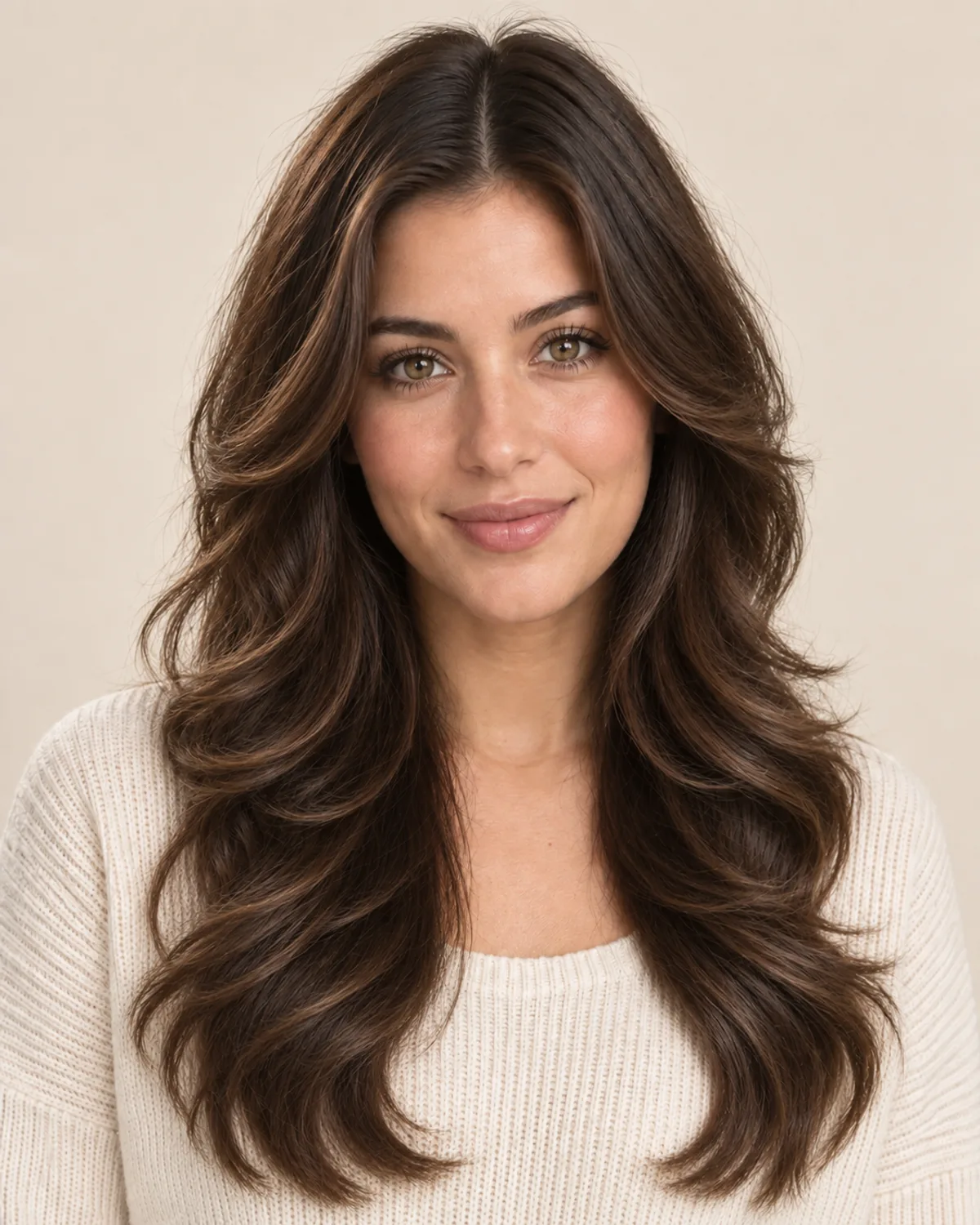
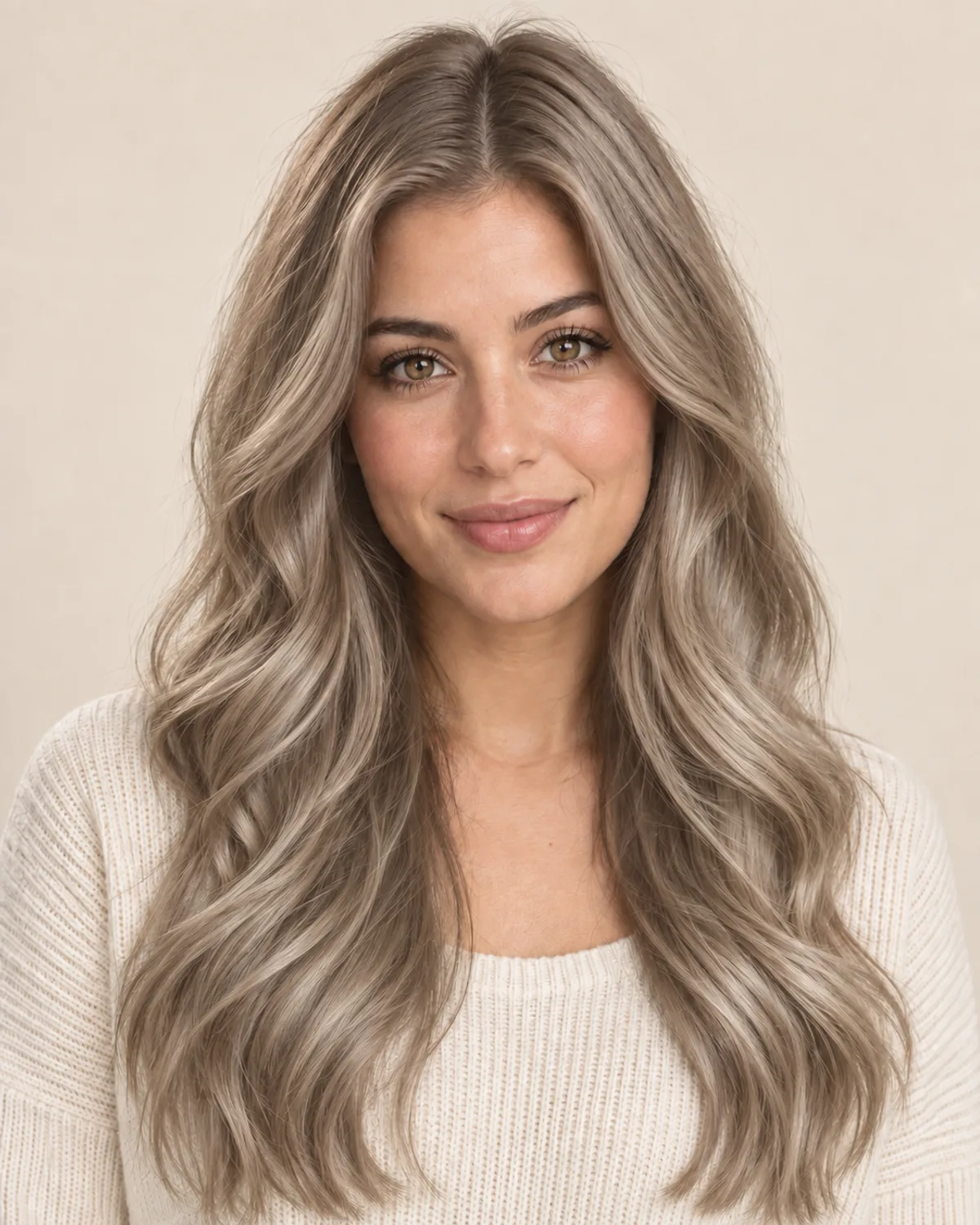
In women, thinning most often shows up as a widening part and less density on top, while the front hairline stays where it was. A buzz is a bigger decision for most women, but the logic is the same: a #2 to #4 stops fine hair lying flat, and with no part there's nothing to widen. A pixie cut is the in-between step — short enough to lift at the roots, long enough to style. The short hair filter shows pixie and crop shapes on your photo before you go further.

Short pixie
Lift at the roots, no long part
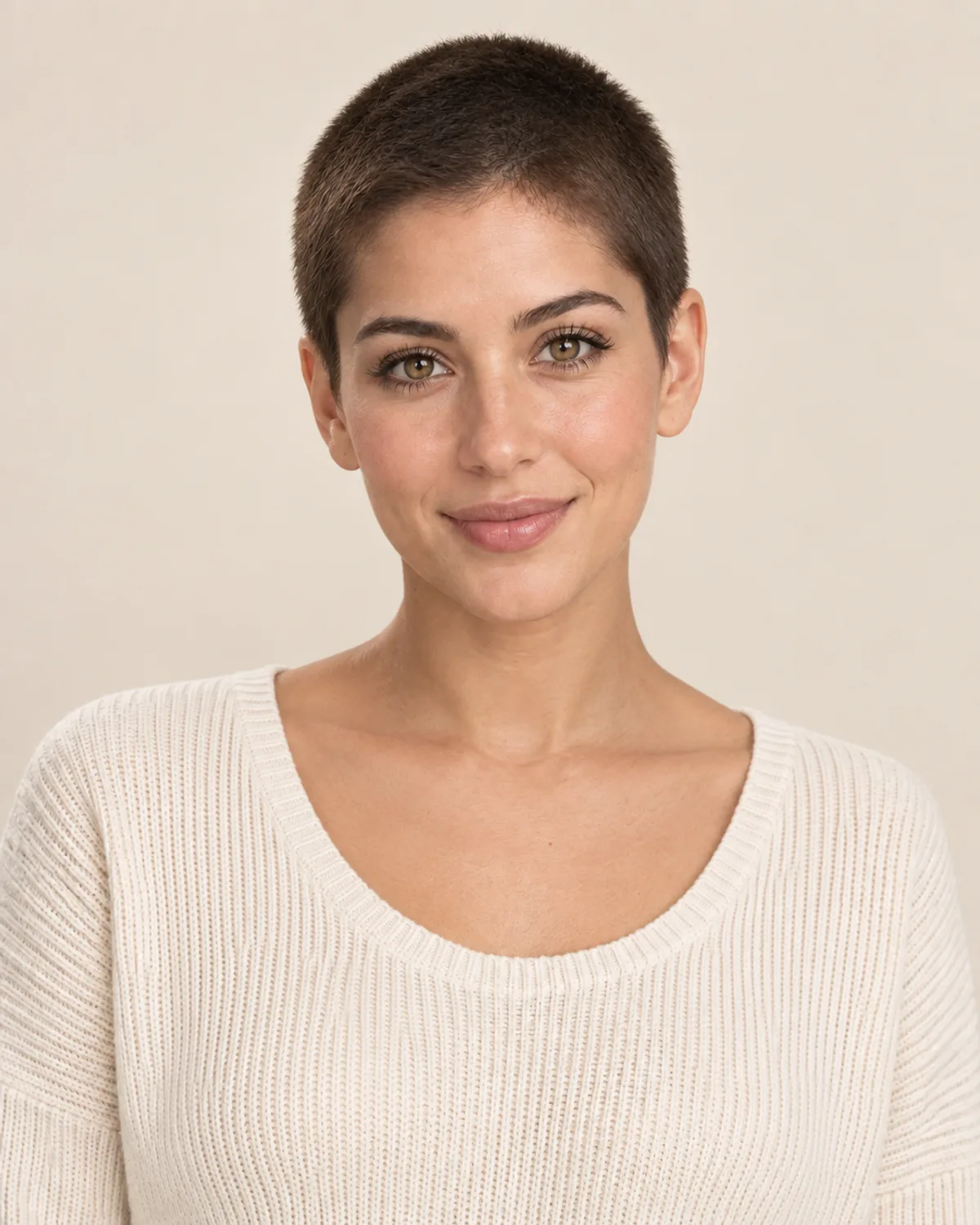
#2 buzz
No part left to widen
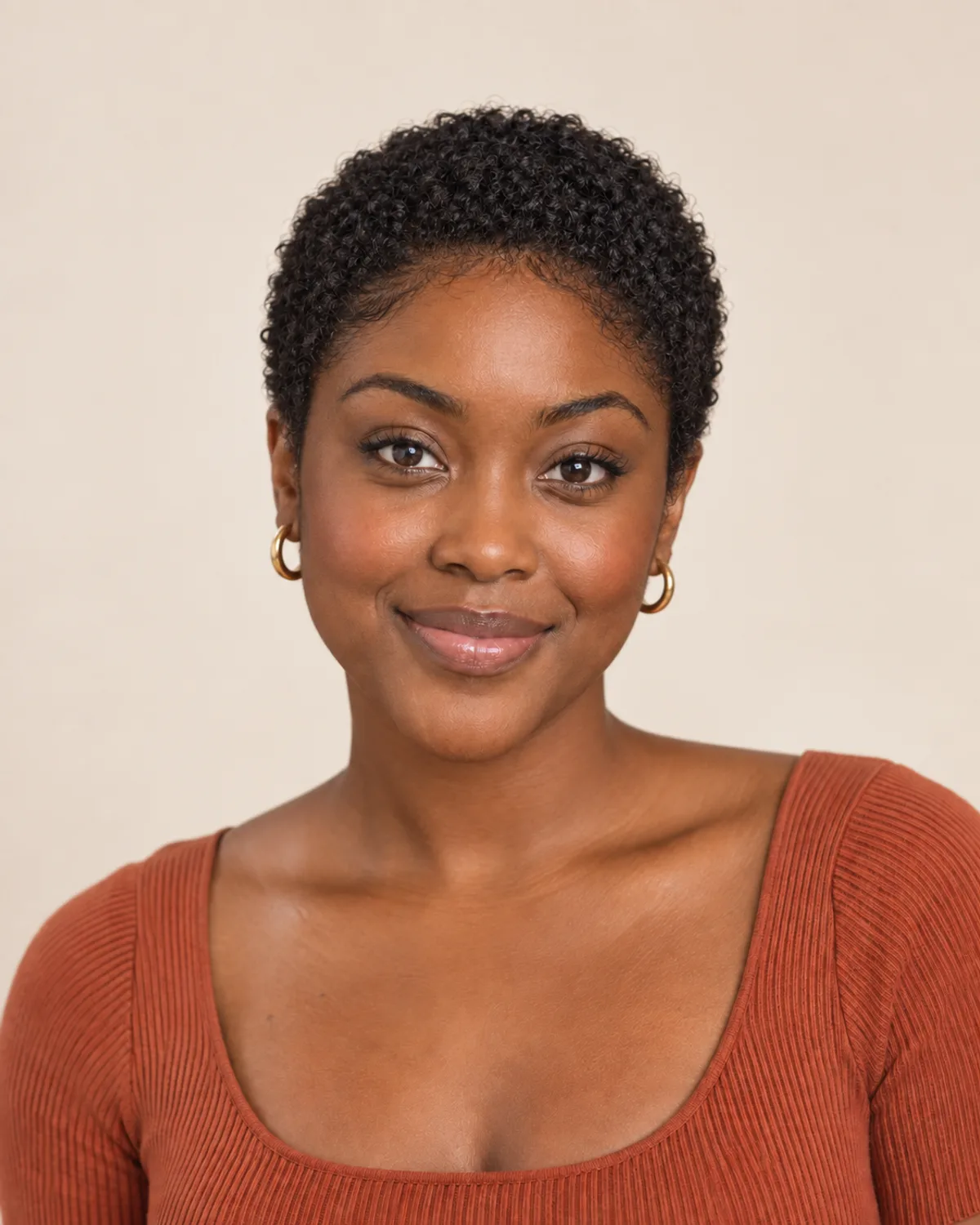
#4 buzz on curls
Keeps a short layer of coils
Heavy shedding that starts suddenly, sometimes a few months after an illness, childbirth or a very stressful stretch, is worth showing a dermatologist before you cut. The same goes for thinning that arrives along with other changes in how you feel.
Thinning hair buzz cut: fade or even?
There are two ways to cut a thinning hair buzz cut: one guard all over (an even buzz), or a fade, where the sides and back taper down to a shorter guard or bare skin.
Even #2 buzz
One guard everywhere

#2 top, skin fade
Sides taken down to bare skin
An even buzz is the simplest cut and the easiest to keep up at home. It's the right call when thinning is spread out or mild, or when your sides aren't much thicker than your top.
A fade is the better tool when your sides are dense and your top isn't. Taking the sides shorter removes the bulk that makes the top look thin by comparison, and gives the head a cleaner outline. If your temples are deep, ask for a low or mid fade: a high skin fade can join the bare corners of a receding hairline to bare sides and make the recession look deeper. A receding hairline buzz cut fade that stays low keeps a little hair at the temples to frame the face.
| Even buzz | Fade | |
|---|---|---|
| What it does | Evens out the whole head | Makes the top look denser by slimming the sides |
| Best for | Diffuse thinning, mild recession, cutting at home | A thin crown or top with thick sides |
| Upkeep | Every 1–3 weeks; easy to do yourself | Every 1–2 weeks; a clean fade is a barber's job |
| Careful with | Thick sides at a long guard next to a thin top | A high skin fade next to very deep temples |
Buzzing thinning hair vs going fully bald
Buzzing works as long as there's enough hair on top to make an even shadow. At some point there isn't: the top is mostly bare, and a buzz only outlines the ring of hair left around the sides and back — the horseshoe. That's the very contrast the buzz was meant to remove, so shaving the lot usually looks better.
Signs you've reached that point:
- Even at a #0 or #1, the top shows shiny, bare skin rather than a shadow.
- A patch of hair sits on its own at the front, cut off from the rest.
- You're already clipping every few days to keep it looking even.

There are two ways to be bald. A stubble shave — clippers with no guard, or a foil shaver — leaves a faint shadow and needs a quick pass about twice a week. On a horseshoe pattern, though, that shadow still shows faintly where hair grows and where it doesn't. A razor shave is the only way to make the whole head match, and it needs redoing every one to three days.

Stubble shave
Clippers with no guard, twice a week
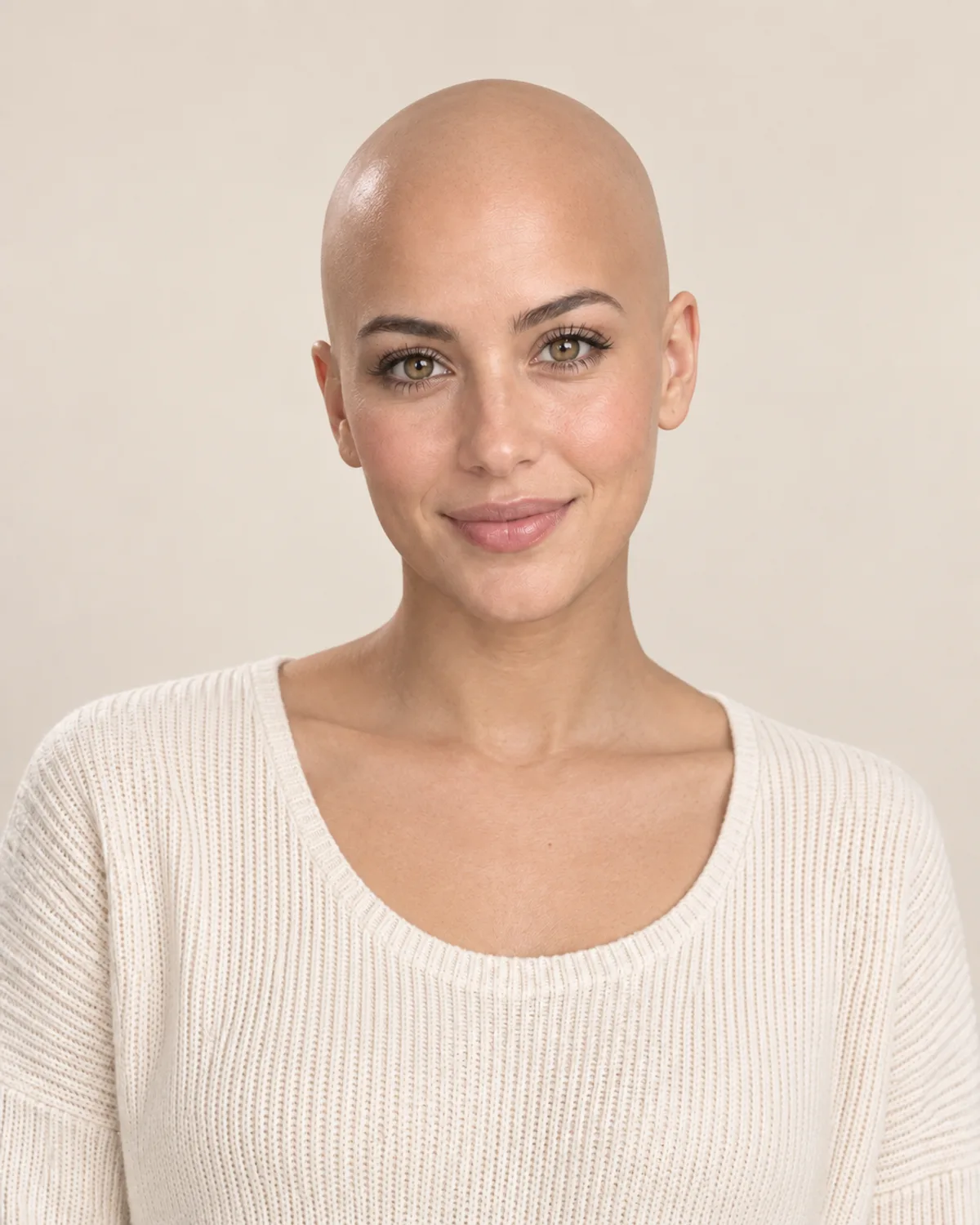
Razor shave
Smooth all over, every 1–3 days
If you're on the fence, a #0 (about 1.5 mm) is a good halfway step: it's as close as a buzz gets, and if you like it, a shave is a small move from there. The bald filter puts a clean shave and a stubble shave side by side on your own photo.
A beard for a buzz cut with thinning hair
With little hair on top, your jaw does more of the framing. A beard moves visual weight down the face, adds shape to the jawline and makes a short buzz or a shaved head look like a choice. A few rules of thumb:
- Keep the beard longer than the hair on your head. Heavy stubble (3–5 mm) suits a #0 or #1; a short boxed beard of about 1–2 cm suits a #1 or #2.
- Blend the sideburns. With a fade, ask your barber to taper the sides straight into the beard so there's no hard break at the ear.
- Keep the lines clean. A tidy neckline, one or two fingers above the Adam's apple, and a clean cheek line matter more when nothing on top draws the eye.
- Clean-shaven works too. With a strong jaw, a bare face and a short buzz look sharp and simple.

#1 buzz, short boxed beard
Receding temples, weight at the jaw
Shaved head, heavy stubble
The lowest-effort pairing

Low fade, short beard
A clean outline, top and bottom
The beard filter tries six beard styles on your photo, from light stubble to a full beard, so you can see which one balances your buzz before you stop shaving.
Scalp care for a thin hair buzz cut
A scalp that has been under hair for years is paler than your face and not used to the sun. A thinning top already gets more sun than it used to, and a buzz exposes it completely. A few habits keep it comfortable:
- Sunscreen every day you're outside. Put a broad-spectrum sunscreen on the top of your head and reapply after sweating or swimming, or wear a hat. A light lotion, gel or spray is the easiest to work into short hair.
- Wash gently. Oil and flakes collect on a buzzed scalp rather than in the hair. A mild shampoo and a good rinse keep it clean; a light, fragrance-free moisturizer helps if it feels tight or dry.
- Clip in several directions. Hair at the crown grows in a swirl, so run the clippers with and across the growth there for an even length. Keep guards clean and blades sharp; dull blades pull and irritate.
- Shave with care if you go bald. Shave after a warm shower, go with the grain first and use a fresh blade to cut down on razor bumps and ingrown hairs.
- Keep an eye on your skin. A buzz lets you actually see your scalp. Show a doctor any mole that is new or changing, a sore that won't heal, or a rough patch that doesn't go away.
- Re-buzz on schedule. A #1 or #2 needs a touch-up every one to two weeks; thin hair starts to lie down and separate again not long after that.
Before you sit in the chair, put a few lengths on your own photo. The buzz cut filter keeps your real hairline, so a #0, a #2 and a skin fade sit side by side on your face; the bald filter shows the shaved alternative, and the beard filter the beard to go with it. It's a preview, not a promise — your barber still needs to see your head in person, from the back as well as the front.